
Mastra Review 2026 - TypeScript Agent Framework
Verified Jun 17, 2026 by Tooliverse Editorial
Mastra turns complex agent development into simple TypeScript. Define agents with tools, memory, and workflows in one framework—then deploy anywhere from Next.js to standalone servers. Trusted by Replit, SoftBank, and PayPal for production AI.
Mastra 1.0 is here - Intro to Mastra (2025 product tour)
Deploy a Mastra AI Agent to AWS in Minutes with Defang
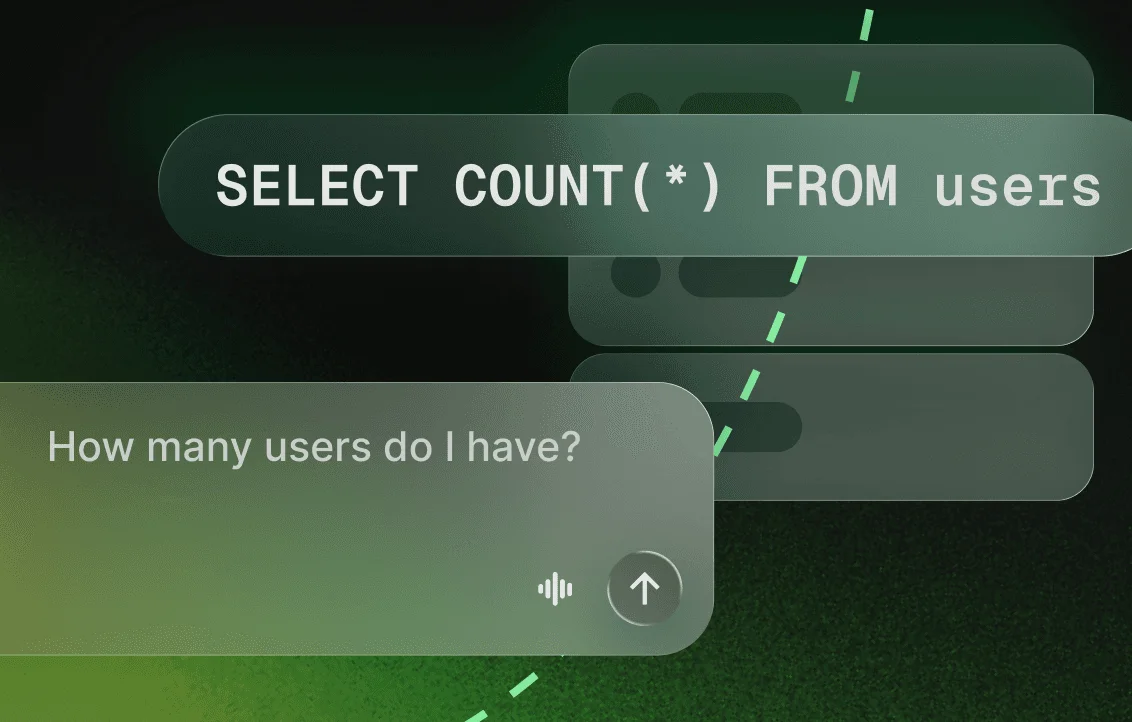
Generate complex SQL queries instantly from simple English questions.
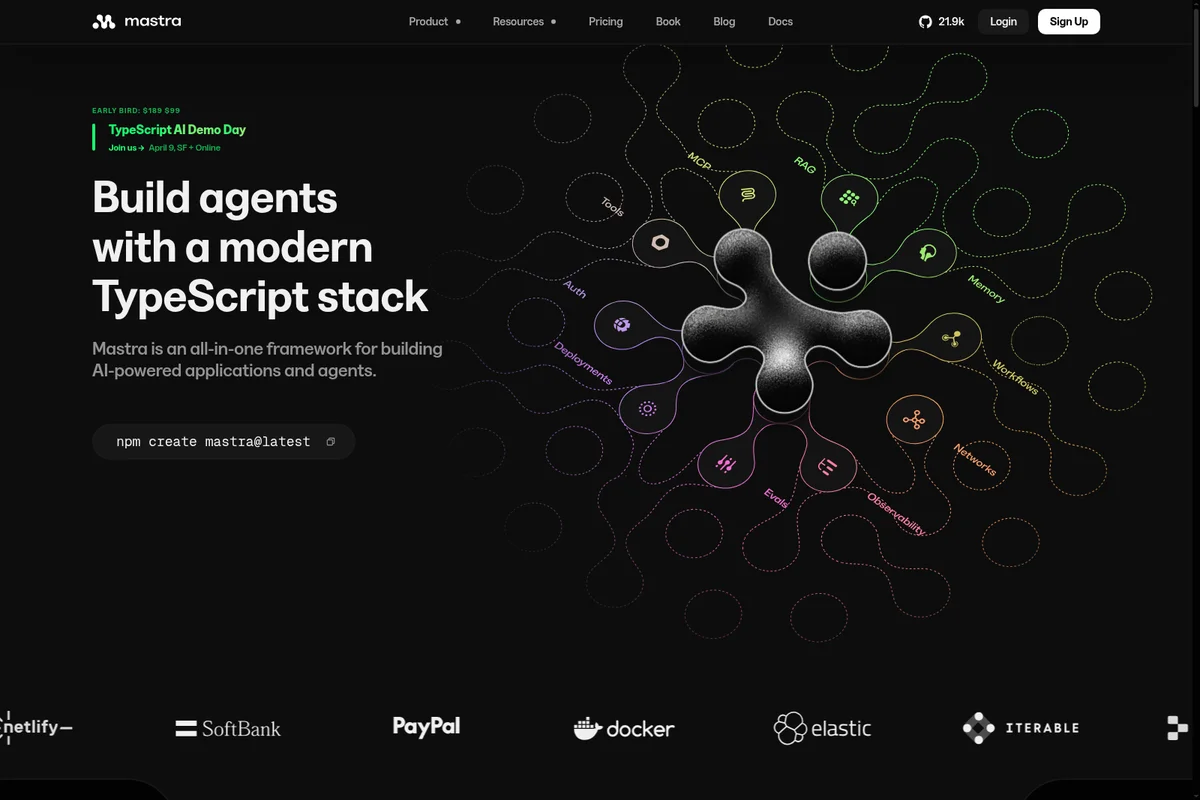
Build AI-powered applications and agents with a modern TypeScript framework.
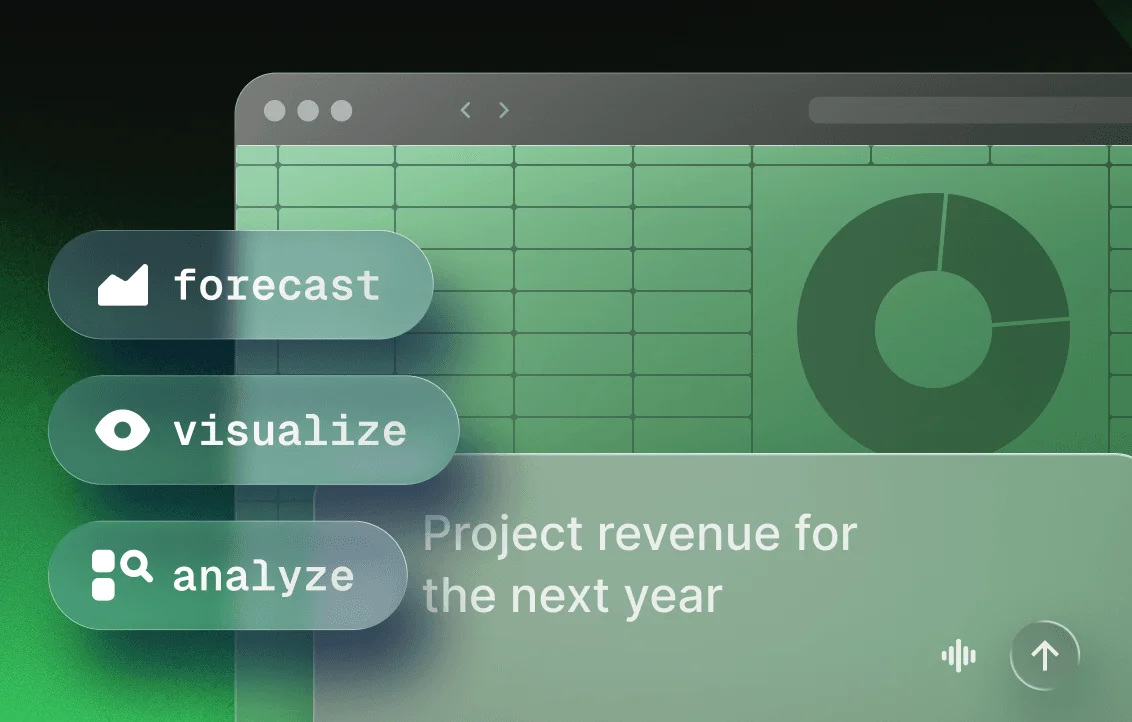
Streamline data analysis and forecasting with AI-powered insights.
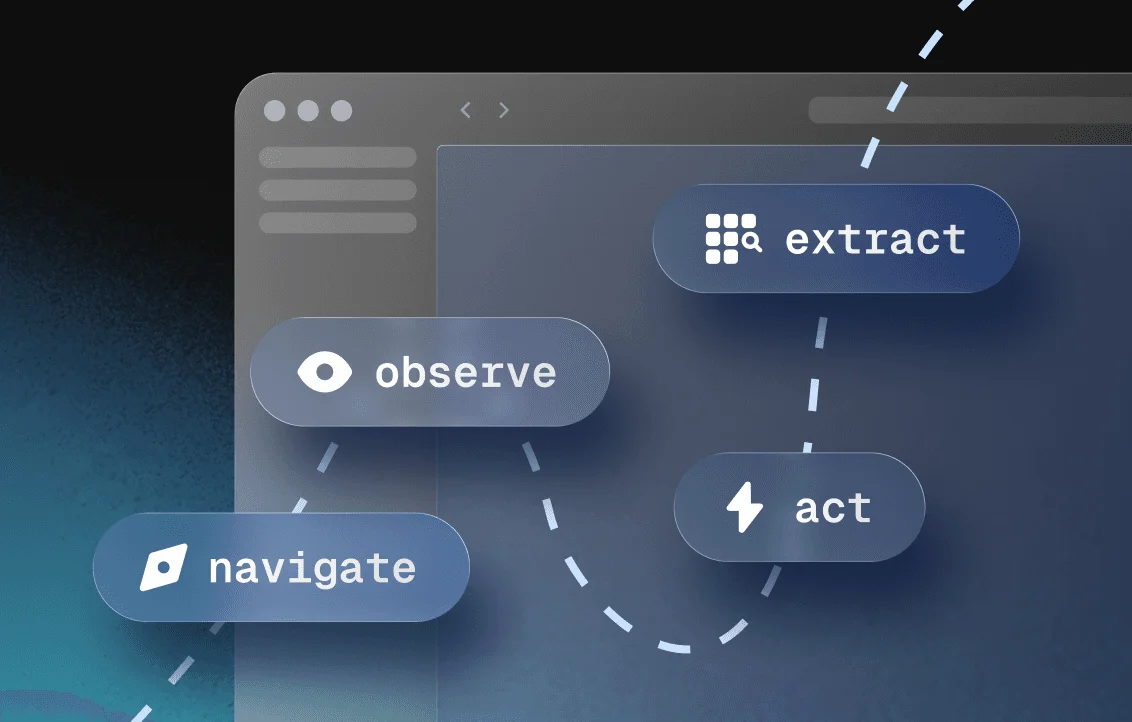
Visualize and build your automated workflows step-by-step.
Mastra Review: Tooliverse Consensus





Based on 280 verified reviews across 4 platforms,
combined with Tooliverse's expert analysis
Mastra has emerged as a leading TypeScript-first framework for building AI agents, favored by full-stack teams for its native type safety, integrated local Studio for visual debugging, and production-ready observability that eliminates the friction of Python wrappers. The Zod-powered tool definitions and clean multi-agent orchestration deliver compile-time error catching that compounds into measurable velocity gains, though the ecosystem of pre-built integrations remains smaller than established Python frameworks and the rapid development cycle occasionally introduces breaking changes.
Bottom line: A top-tier TypeScript framework that brings production-grade agent development to modern web stacks with superior type safety and debugging tools, though teams may need to build custom integrations for specialized APIs.
Mastra | Key Specs
- Platforms
- Web, API
- Pricing Model
- Freemium ($0-250/mo) See plans
- Privacy/Data Use
- Data stays in your VPC (Enterprise self-hosted)
- Security
- SOC 2, SSO, RBAC See details
Wins
- •Provides a native TypeScript experience that eliminates the friction of Python-based wrappersmentioned in 112 reviews
- •Features a powerful local Studio for visual debugging and testing agentic workflowsmentioned in 89 reviews
- •Simplifies multi-agent orchestration with a clean, modular architecture and type-safe toolsmentioned in 76 reviews
Watch-Outs
- •Ecosystem of pre-built integrations is currently smaller than established Python frameworksmentioned in 45 reviews
- •Requires a strong grasp of TypeScript and asynchronous programming for complex implementationsmentioned in 38 reviews
- •Documentation for advanced custom tool schemas can occasionally be sparse or confusingmentioned in 31 reviews
Mastra Features 2026
Unified Model Router
Connect to 1000+ AI models from OpenAI, Anthropic, Google, and more through a single standard interface. Set provider API keys as environment variables and Mastra auto-detects them.
Graph-Based Workflow Engine
Orchestrate complex multi-step processes with explicit control flow using .then(), .branch(), and .parallel() methods. Workflows persist state automatically and can suspend indefinitely and resume where they left off.
Observational Memory System
Track context that matters across sessions with conversation history, data retrieval from APIs/databases/files, and human-like working and semantic memory so agents behave coherently.
MCP Server Authoring
Author Model Context Protocol (MCP) servers to expose agents, tools, and structured resources via the MCP interface. MCP servers built with Mastra can be accessed by any system or agent that supports the protocol.
Mastra User Reviews
Selected Reviews
"Finally a framework that treats TypeScript as a first-class citizen. The type safety with Zod makes building complex agents so much less stressful than the Python alternatives."
"Type-safe tool definitions are the killer feature here. Catching schema errors at compile time instead of runtime is a massive productivity boost."
"Solid framework, but the documentation for custom tool integration could be more detailed. I spent a few hours guessing the schema requirements for complex nested objects."
More from the Community
"The local Studio is a game changer. Being able to visualize the graph and debug tool calls in real-time saved me hours of logging."
"Mastra is great for building agents that live in the same repo as your Next.js app. No more managing separate Python microservices just for AI logic."
"The modularity is excellent. Swapping LLM providers is trivial, and the built-in memory management actually works as advertised in production."
"I love the DX, but the ecosystem is still catching up. I had to write my own integrations for a few niche APIs that LangChain already had out of the box."
"The CLI is helpful, though I encountered a few bugs when initializing a new project on Windows. It seems much more optimized for Mac/Linux environments right now."
"The local Studio is a game changer. Being able to visualize the graph and debug tool calls in real-time saved me hours of logging."
"Mastra is great for building agents that live in the same repo as your Next.js app. No more managing separate Python microservices just for AI logic."
"The modularity is excellent. Swapping LLM providers is trivial, and the built-in memory management actually works as advertised in production."
"I love the DX, but the ecosystem is still catching up. I had to write my own integrations for a few niche APIs that LangChain already had out of the box."
"The CLI is helpful, though I encountered a few bugs when initializing a new project on Windows. It seems much more optimized for Mac/Linux environments right now."
"Mastra has become our go-to for production agents. The telemetry features are surprisingly mature for such a new project."
"Great for building agents that actually work in a real-world software environment, not just demo scripts."
"The community is small but very active. Got my questions about multi-agent state management answered on Discord in under an hour."
"It's fast and lightweight. Exactly what we needed for our edge-deployed AI services where Python was too heavy."
"Mastra has become our go-to for production agents. The telemetry features are surprisingly mature for such a new project."
"Great for building agents that actually work in a real-world software environment, not just demo scripts."
"The community is small but very active. Got my questions about multi-agent state management answered on Discord in under an hour."
"It's fast and lightweight. Exactly what we needed for our edge-deployed AI services where Python was too heavy."
Mastra Pricing 2026
View SourceThe open-source framework is free forever under Apache 2.0, which is all most developers need to start building. The platform tiers add observability and hosted infrastructure: Starter at $0/month gives you 100,000 events and 24 CPU hours to instrument early production agents, while Teams at $250/month is where serious deployments land—1 million events, 250 CPU hours, six months of retention, and the SSO and compliance docs that enterprise buyers require. Overages are metered reasonably, so you're not guessing at usage cliffs.
Mastra In-Depth Review 2026

This open-source TypeScript framework bundles agents, workflows, memory, and observability into one system designed for developers who want to ship AI features without leaving their existing Next.js or Node.js environment. It connects to over 1,000 AI models through a unified router, integrates directly with React and backend frameworks, and deploys anywhere Node.js runs. The defining characteristic: everything is type-safe from the ground up, catching errors at compile time instead of in production.
What It's Like Day-to-Day
The local Studio changes how you build and debug agents. Instead of parsing logs to understand why an agent made a wrong tool call or stalled mid-execution, you get a visual graph showing exactly what happened at each step. One Reddit reviewer called it "a game changer," noting that "being able to visualize the graph and debug tool calls in real-time saved me hours of logging." That feedback loop—write code, test in Studio, see the execution trace, fix the issue—compresses what used to take an afternoon into twenty minutes.
The Zod-powered tool definitions are where the TypeScript advantage becomes tangible. Define your tool schema once with full type inference, and the framework handles validation, error messages, and IDE autocomplete.
Mastra Security & Compliance
Verified Compliance
- SOC 2
Security Features
- SSO
- RBAC
- Audit logs
Privacy Commitments
- Data stays in your VPC (Enterprise self-hosted)
- No traces, prompts, or outputs leave your environment (Enterprise self-hosted)
Mastra: Frequently Asked Questions (FAQs)
What is Mastra?
Mastra is an open-source TypeScript framework for building AI-powered applications and agents. Mastra provides agents, workflows, memory, workspaces and observability, letting developers go from idea to implementation. Mastra integrates with frontend and backend frameworks like React, Next.js and Node, or can be deployed anywhere as a standalone server.
Is Mastra an agent builder?
Mastra is a TypeScript framework for building AI agents and AI-powered applications. Mastra agents use LLMs and tools to solve open-ended tasks, reasoning about goals, deciding which tools to use and iterating internally until the model emits a final answer or an optional stopping condition is met. Mastra also provides workflows, memory, workspaces and observability to support the full agent development lifecycle.
What can you build with Mastra?
Mastra supports building AI-powered applications that combine language understanding, reasoning and action to solve real-world tasks. Mastra use cases include conversational agents for customer support, onboarding or internal queries, domain-specific copilots for coding, legal, finance, research or creative work, workflow automations that trigger, route and complete multi-step processes, and decision-support tools that analyze data and provide actionable recommendations.
What AI models and providers does Mastra support?
Mastra's model routing connects to 90+ providers through one standard interface. Mastra supports models from OpenAI, Anthropic, Gemini and more, allowing developers to use different AI providers through a single API.
Mastra Integrations
| Next.js | React | Astro |
| Express | SvelteKit | Hono |
| OpenAI | Anthropic | Google Gemini |
| Vercel | Netlify | Cloudflare |
| MongoDB | Elastic | Slack |
Mastra: Verified Data Sheet
| # | Label | Data Point |
|---|---|---|
| [1] | Mastra Consensus: 8.84/10 | Mastra is a highly-rated tool among AI agent tools in the Tooliverse index, with a consensus score of 8.84/10 across 280 verified reviews. |
| [2] | What is Mastra | Mastra is an open-source TypeScript framework for building AI agents and workflows, created by the team behind Gatsby. The framework serves companies like Replit, SoftBank, PayPal, and PLAID, with 25,100+ GitHub stars and $35M raised from Spark Capital and Y Combinator. Pricing starts free (Apache 2.0 license) with platform tiers at $0-250/month. |
| [3] | Tooliverse Consensus on Mastra | Mastra has emerged as a leading TypeScript-first framework for building AI agents, favored by full-stack teams for its native type safety, integrated local Studio for visual debugging, and production-ready observability that eliminates the friction of Python wrappers. The Zod-powered tool definitions and clean multi-agent orchestration deliver compile-time error catching that compounds into measurable velocity gains, though the ecosystem of pre-built integrations remains smaller than established Python frameworks and the rapid development cycle occasionally introduces breaking changes. |
| [4] | Mastra Verdict | Mastra bottom line: A top-tier TypeScript framework that brings production-grade agent development to modern web stacks with superior type safety and debugging tools, though teams may need to build custom integrations for specialized APIs. |
| [5] | Free (Framework): Free | Mastra provides a Free (Framework) tier under the Apache 2.0 open-source license, allowing developers to build and host agents anywhere at no cost. |
| [6] | Native TypeScript, no Python wrappers | Mastra provides a native TypeScript experience that eliminates the friction of Python-based wrappers, validated by 112 user reviews as a game-changer for full-stack development teams. |
| [7] | Local Studio for visual debugging | Mastra features a powerful local Studio for visual debugging and testing agentic workflows, with 89 user reviews highlighting it as essential for rapid iteration and production troubleshooting. |
| [8] | Clean multi-agent orchestration | Mastra simplifies multi-agent orchestration with a clean, modular architecture and type-safe tools, according to 76 user reviews praising its approach to complex agent coordination. |
| [9] | Production-ready observability | Mastra offers robust built-in observability and tracing that works seamlessly in production environments, validated by 64 user reviews as critical for monitoring agent behavior at scale. |
| [10] | Teams: $250/month | Mastra Teams empowers users with 1M observability events (then $8/100K) for just $250 monthly, significantly expanding on the free tier's capabilities. |
| [11] | Smaller integration ecosystem | Mastra's ecosystem of pre-built integrations is currently smaller than established Python frameworks like LangChain, noted in 45 user reviews as requiring custom integration work for niche APIs. |
| [12] | Requires TypeScript expertise | Mastra requires a strong grasp of TypeScript and asynchronous programming for complex implementations, according to 38 user reviews noting a steeper learning curve for developers without modern JavaScript experience. |
| [13] | SOC 2 | Mastra maintains SOC 2 certification. |
| [14] | Enterprise: SSO | Mastra provides enterprise security with SSO, RBAC, and Audit logs. |
| [15] | Type safety reduces agent complexity | A verified Product Hunt reviewer noted that Mastra "treats TypeScript as a first-class citizen" with Zod-powered type safety that makes "building complex agents so much less stressful than the Python alternatives." |
Best Mastra Alternatives
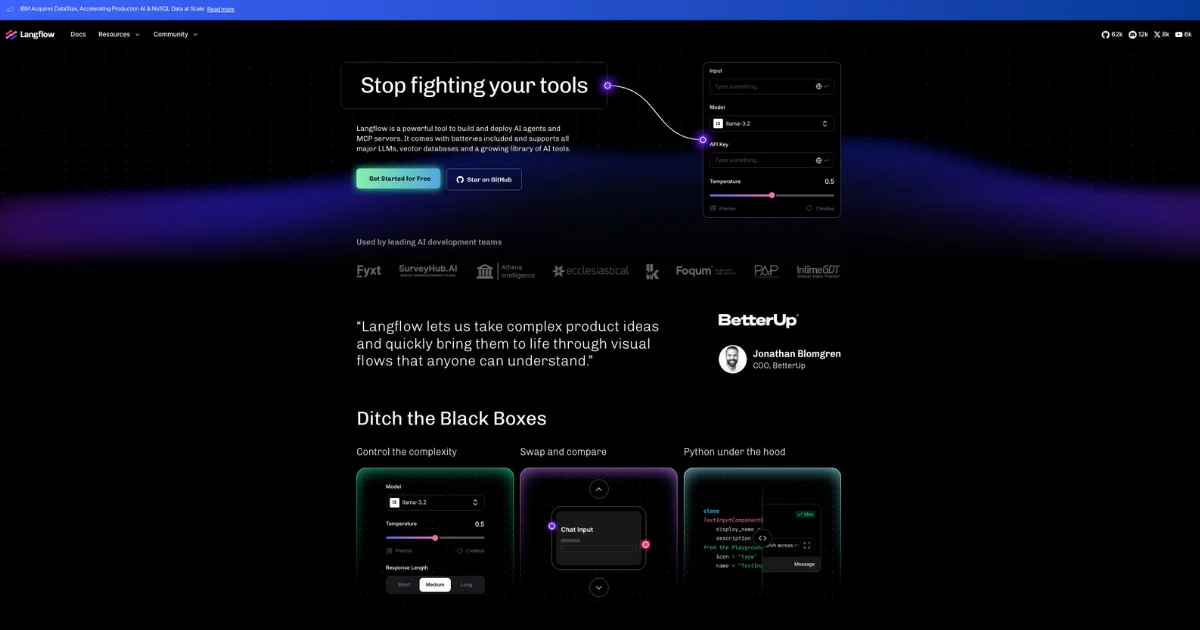
Langflow
Build and deploy AI agents and MCP servers without fighting your tools—drag, drop, and ship production-ready workflows.
Botpress
Build AI agents that handle complex workflows, not just simple questions.
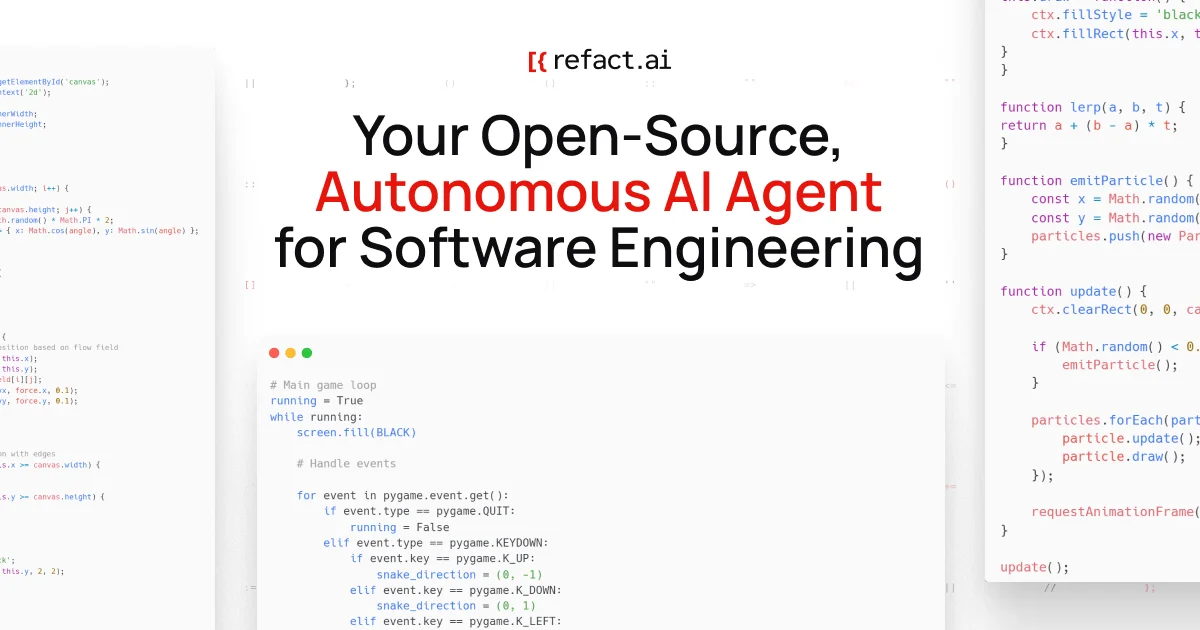
Refact.ai
Open-source AI agent that codes, debugs, and deploys—trained on your codebase, running on your infrastructure.