
Paper Review 2026 - HTML/CSS Design Canvas
Verified Jun 17, 2026 by Tooliverse Editorial
Paper connects your design work directly to code, agents, and real data—no translation layer. Built on HTML/CSS, it lets AI agents read and write to your canvas while you design with actual content from Notion, Spotify, or any API.
How to create high quality, searchable PDFs in Paper
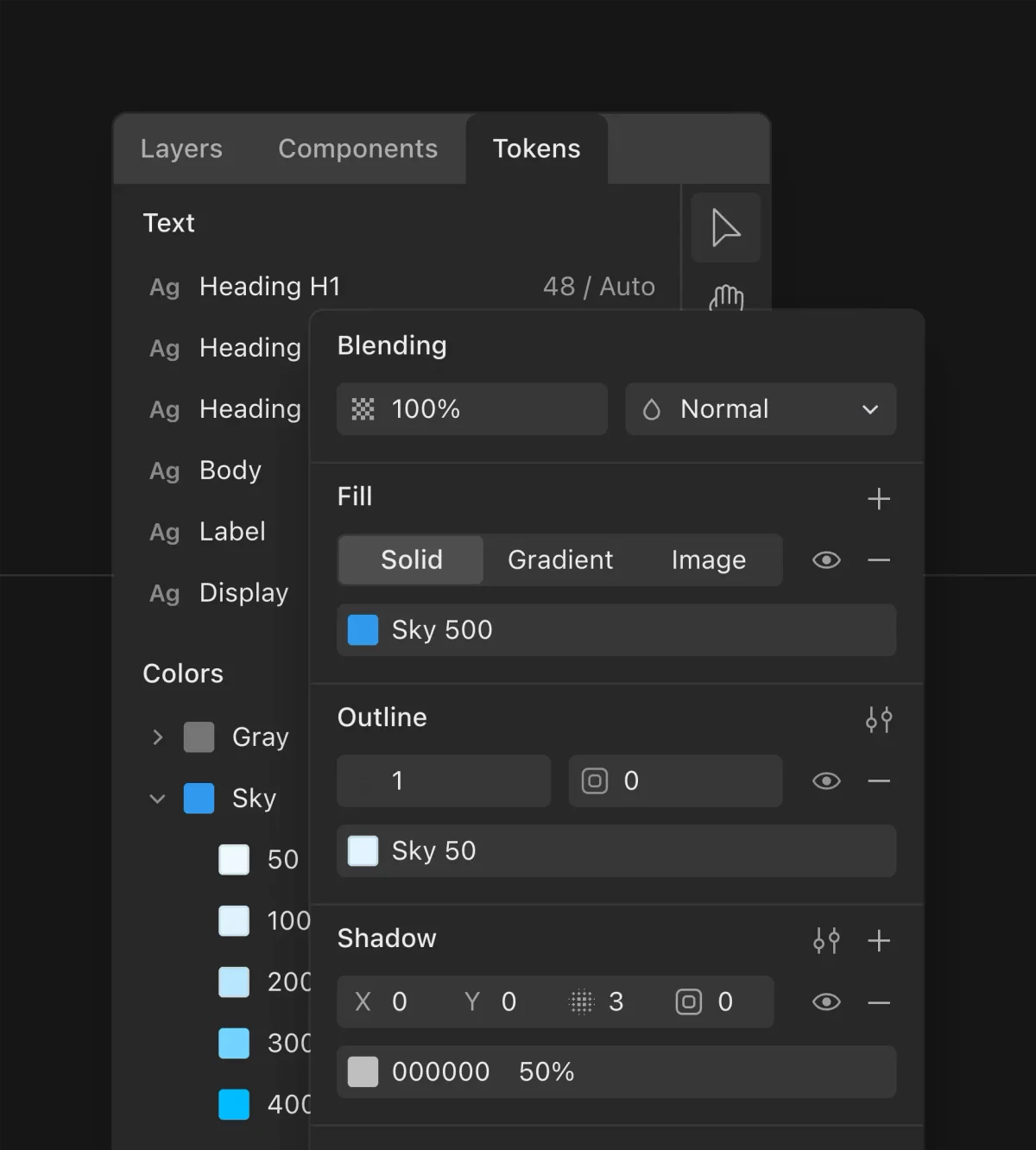
Precisely control element appearance with blending, fill, outline, and shadow.
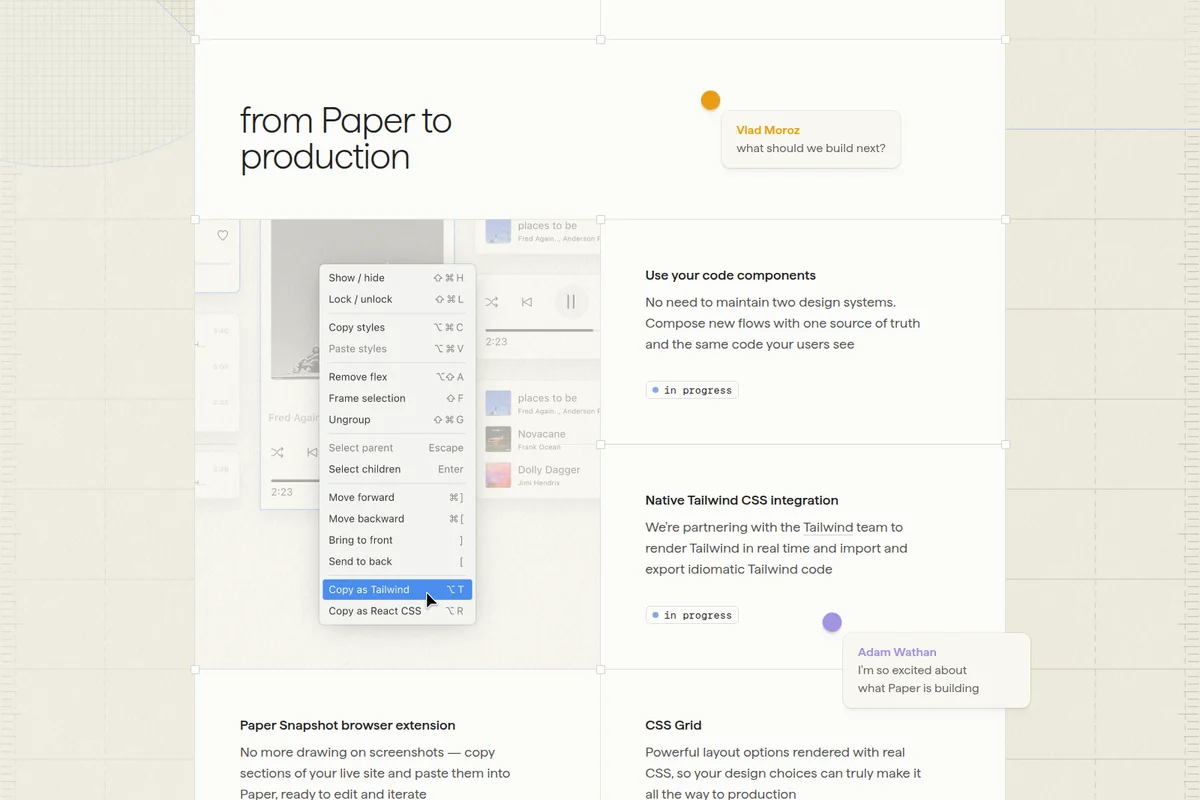
Copy styles directly as idiomatic Tailwind CSS for seamless design-to-code workflows.
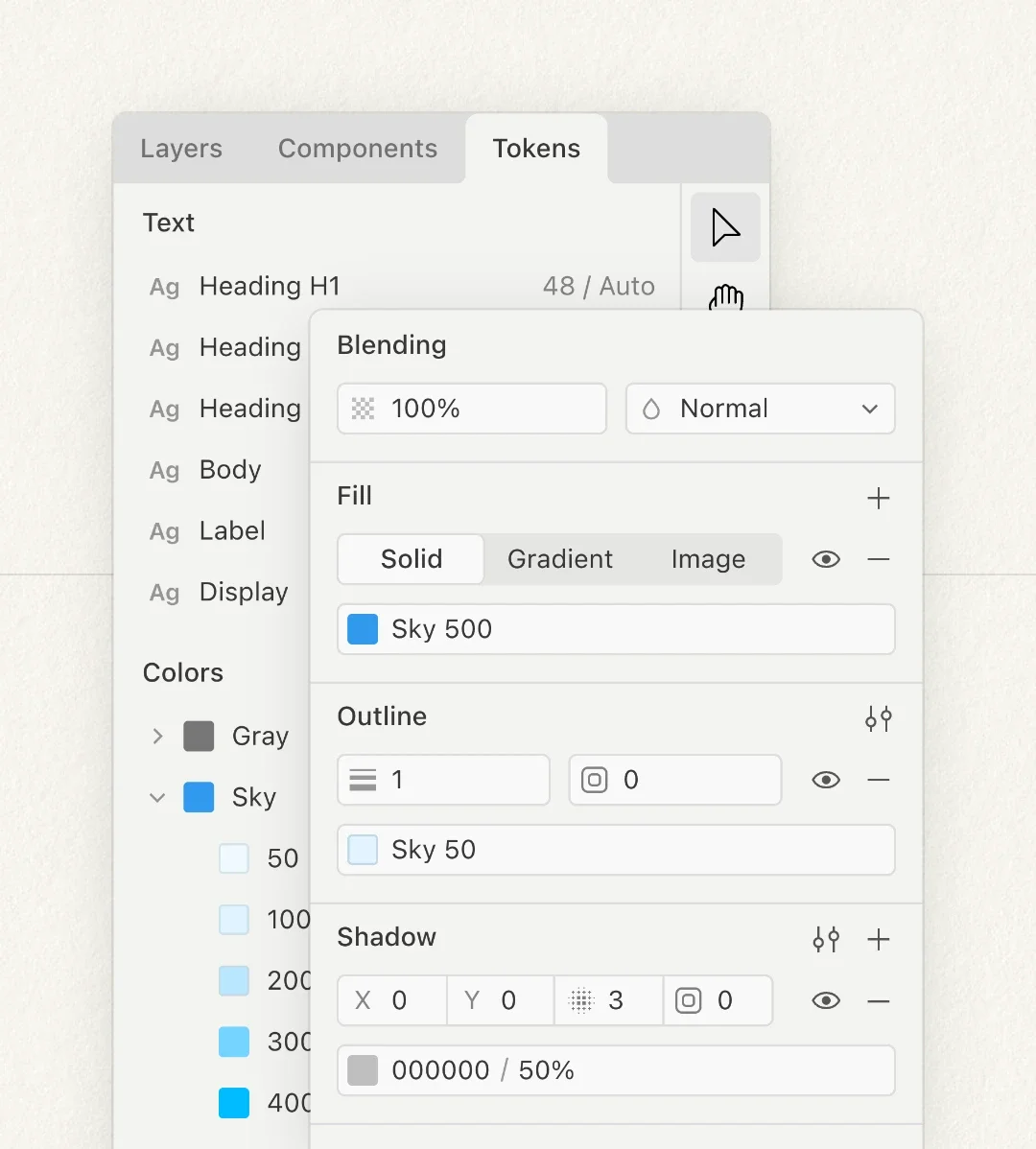
Define and manage reusable design tokens for consistent branding and styles.
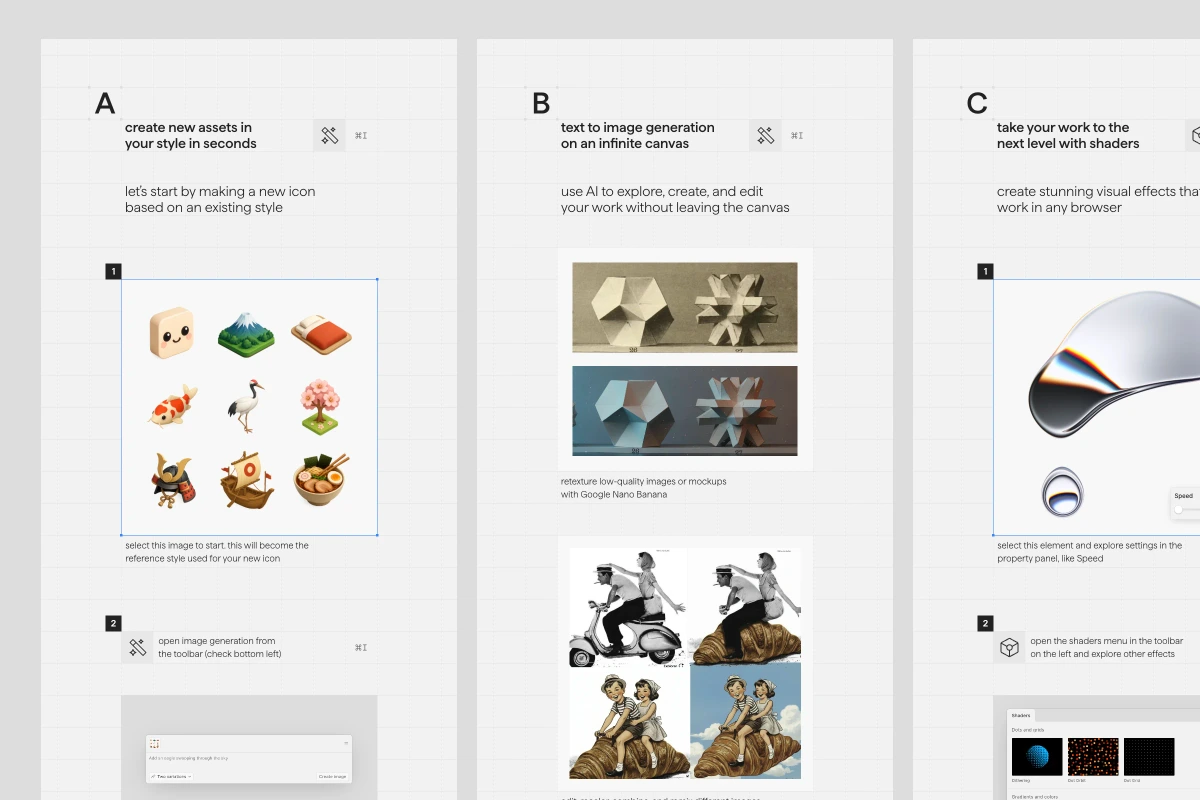
Explore AI-powered asset creation, image generation, and stunning visual effects within the tool.
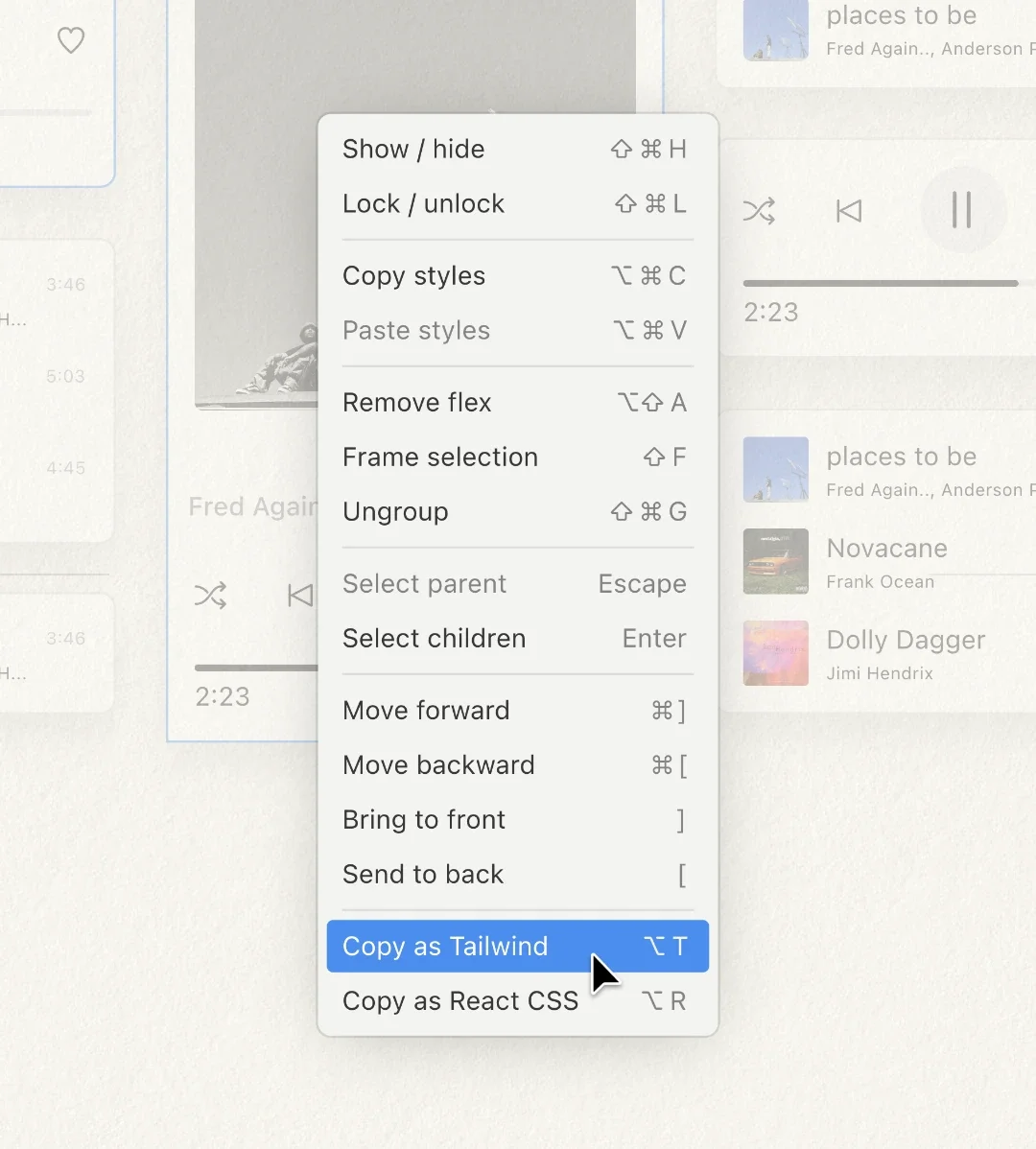
Instantly export selected design elements as production-ready Tailwind CSS.

Create striking halftone portraits and artistic renders from your images.
Paper Review: Tooliverse Consensus




Based on 94 verified reviews across 3 platforms,
combined with Tooliverse's expert analysis
Paper is a code-native design tool built on real HTML and CSS that allows AI agents to read and write directly to the canvas via MCP server integration, fundamentally changing how developers and hybrid designers approach the design-to-production workflow. The zero-drift architecture and native Tailwind export eliminate translation friction for teams shipping web products, with GPU-accelerated shaders and perceptually uniform color tools adding polish that traditional tools require manual effort to achieve. The alpha-stage stability issues and missing component system create real friction for complex projects, but the architectural advantages resonate strongly with technical teams building at the intersection of design and code.
Bottom line: A leading web-native design tool that eliminates design-to-code drift through HTML/CSS architecture and bidirectional AI agent integration, though alpha-stage stability and the absent component system require tolerance for rough edges.
Paper | Key Specs
Wins
- •HTML/CSS native canvas ensures zero drift between design and production codementioned in 42 reviews
- •Bidirectional MCP server allows AI agents to write directly to the design canvasmentioned in 38 reviews
- •Stunning GPU-accelerated shaders like mesh gradients and liquid metal effectsmentioned in 29 reviews
Watch-Outs
- •Currently in open alpha with occasional stability and performance issuesmentioned in 31 reviews
- •Lacks a robust component system for managing complex design librariesmentioned in 26 reviews
- •Requires a high degree of code comfort, creating a steep learning curvementioned in 22 reviews
Paper Features 2026
MCP Server Integration
Connect AI agents (Claude Code, Cursor, Codex, Copilot, OpenCode) directly to your design files via Model Context Protocol. Agents can read and write to your canvas, enabling workflows like building designs from prompts or syncing tokens from Figma.
Real HTML/CSS Canvas
Design on a web-native canvas built with actual HTML and CSS, not proprietary formats. Designs export as production-ready code with no translation layer, making handoff seamless.
Live Data Integration
Pull real content from any API, database, or app (Notion, Spotify, CMS) directly into your designs. Design with actual data instead of placeholder content.
Design-to-Code Export
Export designs as JSX with Tailwind or inline styles. Agents can build production websites from your designs using React, maintaining proper flex layouts and responsive breakpoints.
Paper User Reviews
Selected Reviews
"For my latest project, I completely switched from Figma to Paper. The MCP integration is a game changer—it's way more efficient for my AI agents to read and write directly to the canvas."
"The 'Paper Snapshot' extension is a lifesaver for iterating on existing sites. Just copy-paste real elements into the canvas."
"The shaders are incredible. I can create mesh gradients and liquid effects that would take hours in other tools. Only downside is the lack of components right now."
More from the Community
"It's a powerful concept, but definitely feels like an alpha. I've had a few crashes when running complex agents, and the UI can be a bit clunky compared to Figma."
"Finally a design tool that speaks the same language as my code. No more guessing how a flexbox will look in production."
"The Tailwind export is the cleanest I've seen. It's not just 'code-like'—it's actual production-ready code. Needs better file organization though."
"I want to love it, but $20/month is a lot when it's still missing basic features like a proper layers panel or component overrides."
"Paper.design is the first tool that actually makes 'designing with agents' feel real. The bidirectional sync is magic."
"It's a powerful concept, but definitely feels like an alpha. I've had a few crashes when running complex agents, and the UI can be a bit clunky compared to Figma."
"Finally a design tool that speaks the same language as my code. No more guessing how a flexbox will look in production."
"The Tailwind export is the cleanest I've seen. It's not just 'code-like'—it's actual production-ready code. Needs better file organization though."
"I want to love it, but $20/month is a lot when it's still missing basic features like a proper layers panel or component overrides."
"Paper.design is the first tool that actually makes 'designing with agents' feel real. The bidirectional sync is magic."
"Great for landing pages and quick prototypes. The AI image generation and background removal are nice touches that keep me in the app."
"The most exciting design tool I've used in years. It's built for how we build today—with code and AI at the center."
"The OKLCH color picker is a small but brilliant detail. Shows the team really cares about modern web standards."
"The learning curve is real. If you don't know CSS, you'll struggle to get the most out of the canvas. It's definitely for 'hybrid' designers."
"Great for landing pages and quick prototypes. The AI image generation and background removal are nice touches that keep me in the app."
"The most exciting design tool I've used in years. It's built for how we build today—with code and AI at the center."
"The OKLCH color picker is a small but brilliant detail. Shows the team really cares about modern web standards."
"The learning curve is real. If you don't know CSS, you'll struggle to get the most out of the canvas. It's definitely for 'hybrid' designers."
Paper Pricing 2026
View SourceThe free tier handles prototyping with 100 weekly MCP calls, but Pro at $16 monthly is where the tool makes sense for production work: 1 million MCP calls weekly removes the ceiling on agent-driven workflows, and unlimited collaboration files mean your team isn't rationing access. That's the tier to target if you're using AI agents daily. Organizations pricing requires a sales conversation, worth pursuing only if SAML/SSO and admin controls are procurement requirements.
Paper In-Depth Review 2026

This web-native design tool runs on actual HTML and CSS instead of proprietary rendering engines. What you see on the canvas is what ships to production, pixel-perfect, because the canvas is production code. It works across modern browsers, exports to React and Tailwind, and connects directly to AI agents via MCP server integration. Vercel, Perplexity, PostHog, and Tailwind use it in production, which tells you something about who it's built for.
What It's Like Day-to-Day
The workflow feels different from the first session. You're not approximating how a flexbox will behave; you're working with an actual flexbox. CSS filters, mesh gradients, liquid metal shaders render with GPU acceleration, creating effects that would take hours of manual work in traditional tools. The OKLCH color picker handles perceptually uniform color adjustments across Display P3 and sRGB simultaneously, a detail that matters when you're designing for modern displays.
The MCP integration is where the tool separates itself from everything else in the space. Connect Claude Code, Cursor, or Codex, and your AI agents can read the DOM structure and write directly to the canvas.
Paper Security & Compliance
Security Features
- SAML / SSO
Paper Integrations
| Cursor | Claude Code | Codex |
| GitHub Copilot | OpenCode | Antigravity |
| VS Code | Zed | Fleet |
| Nova | iTerm | Windsurf |
| Cline | Continue | Cody |
| Figma | Notion | GitHub |
| Slack |
Paper: Verified Data Sheet
| # | Label | Data Point |
|---|---|---|
| [1] | Paper Consensus: 9.38/10 | Paper is one of the highest-rated AI design tools in the Tooliverse index, with a consensus score of 9.38/10 across 94 verified reviews. |
| [2] | What is Paper | Paper is a web-native design tool built on real HTML/CSS, enabling AI agents to read and write directly to the canvas via MCP server. Used in production by Vercel, Perplexity, PostHog, and Tailwind, with pricing starting at $16/month. |
| [3] | Tooliverse Consensus on Paper | Paper is a code-native design tool built on real HTML and CSS that allows AI agents to read and write directly to the canvas via MCP server integration, fundamentally changing how developers and hybrid designers approach the design-to-production workflow. The zero-drift architecture and native Tailwind export eliminate translation friction for teams shipping web products, with GPU-accelerated shaders and perceptually uniform color tools adding polish that traditional tools require manual effort to achieve. The alpha-stage stability issues and missing component system create real friction for complex projects, but the architectural advantages resonate strongly with technical teams building at the intersection of design and code. |
| [4] | Paper Verdict | Paper bottom line: A leading web-native design tool that eliminates design-to-code drift through HTML/CSS architecture and bidirectional AI agent integration, though alpha-stage stability and the absent component system require tolerance for rough edges. |
| [5] | Free: Free | Paper offers a Free tier with 100/week MCP tool calls and limited image generation, making AI-powered design accessible at no cost. |
| [6] | Zero drift HTML/CSS canvas | Paper operates on a real HTML/CSS canvas that eliminates drift between design and production code, validated as a game-changer for developer handoff by 42 user reviews. |
| [7] | Bidirectional AI agent integration | Paper provides bidirectional MCP server integration that allows AI agents like Claude Code, Cursor, and Codex to read and write directly to the design canvas, validated by 38 user reviews. |
| [8] | Pro: $16/user/mo (annual) | Paper Pro empowers users with 1M/week MCP tool calls for $16/user/month billed annually, significantly expanding on the free tier's capabilities. |
| [9] | GPU-accelerated shader effects | Paper delivers GPU-accelerated visual effects including mesh gradients and liquid metal shaders that would require hours of manual work in traditional design tools, according to 29 user reviews. |
| [10] | Native Tailwind CSS export | Paper exports native Tailwind CSS with proper flexbox layouts and responsive breakpoints, simplifying developer handoff workflows according to 24 user reviews. |
| [11] | Alpha stability issues | Paper remains in open alpha with occasional stability and performance issues reported by 31 users, particularly when running complex AI agent workflows. |
| [12] | Limited component system | Paper lacks a robust component system for managing design libraries and reusable elements, a limitation noted by 26 user reviews. |
| [13] | Enterprise: SAML / SSO | Paper provides enterprise security with SAML / SSO. |
| [14] | Makes AI design workflows real | Paper "is the first tool that actually makes 'designing with agents' feel real" with bidirectional sync described as "magic," according to a verified Hacker News reviewer. |
Best Paper Alternatives
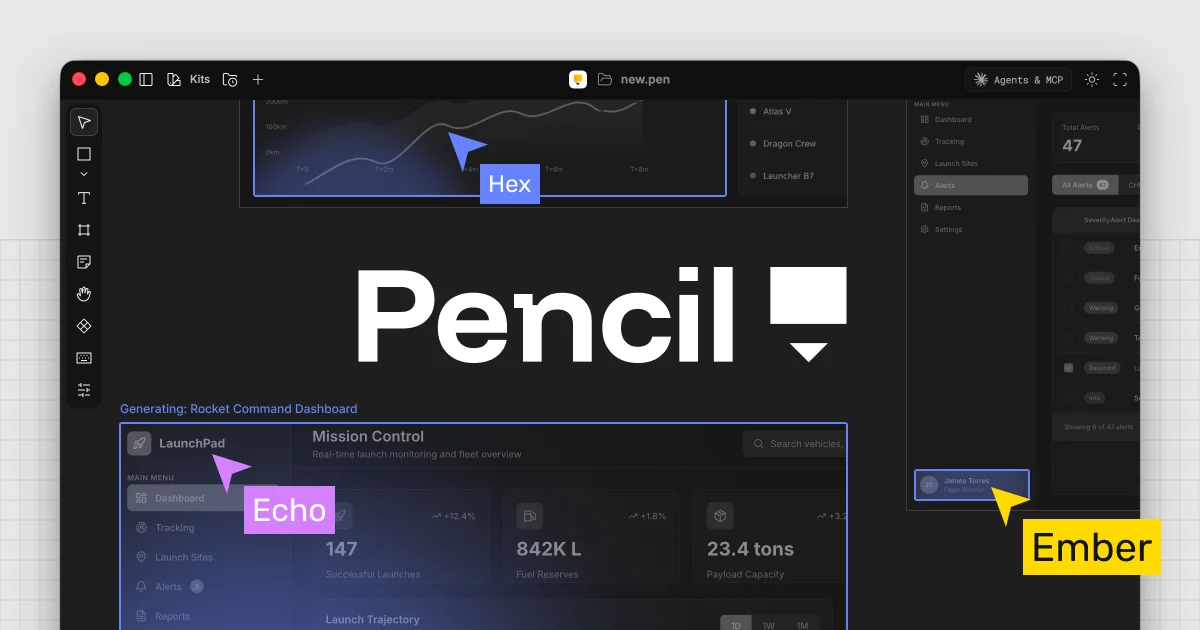
Pencil
Design as code—build UI components directly in your IDE with AI-powered design tools.
Rendair AI
Transform sketches, 3D models, and floor plans into photorealistic architectural renders in seconds with AI.
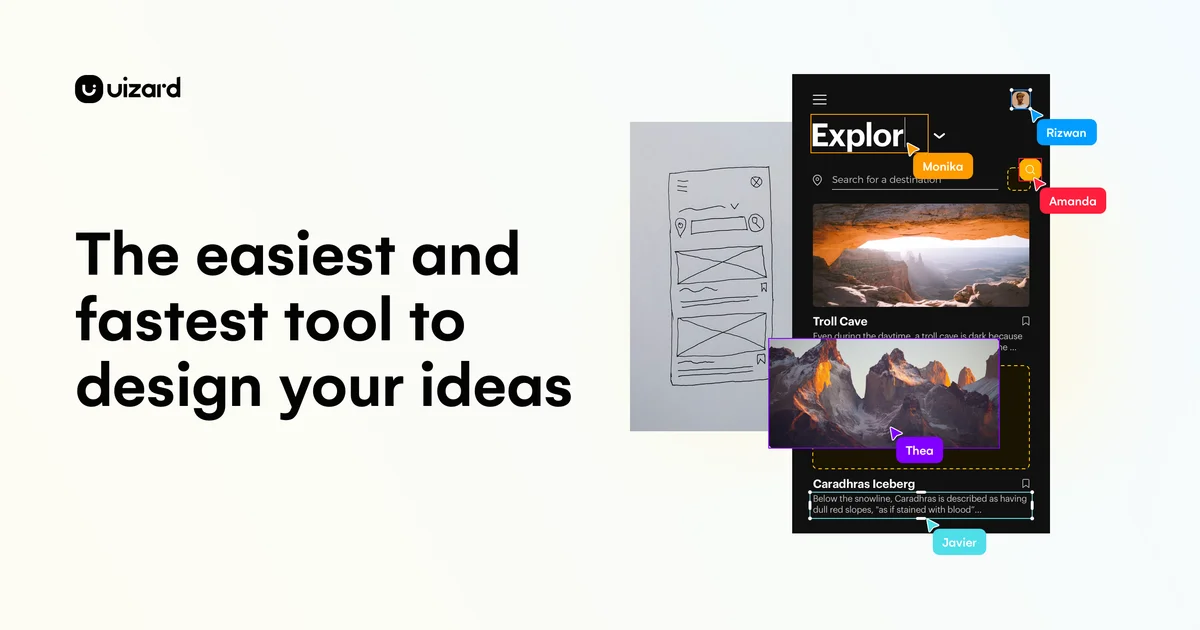
Uizard
Turn product ideas into concepts instantly with GenAI and visualize designs in minutes.